
 Campaign by
 Story
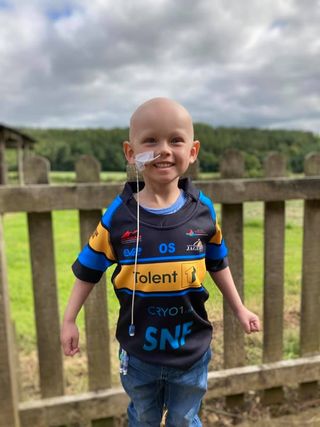
Oliver is a happy, active ten-year-old who loves playing with his little brother Alfie and his friends at school.
He is bravely battling high-risk neuroblastoma, an aggressive childhood cancer with only a 40–50% long-term survival rate at diagnosis.
After completing treatment in 2021 and a vaccine trial in the US, Oliver sadly relapsed just before Christmas 2024. He finished further treatment in summer 2025 and began DFMO, but scans in January 2026 showed a second relapse.
Oliver is currently undergoing chemotherapy, and his family are fundraising to keep all possible treatment options open for what comes next.
Oliver's Story
In January 2020 Oliver was taken to the GP after his parents noticed changes to his skin. He was taken for a blood test and the following day had further tests and scans.
The day passed in a blur as our happy little boy suddenly became frightened, withdrawn and looked very poorly. I was shocked when they said that Oliver needed to stay overnight whilst they looked further into the test results, says Oliver's mum, Laura.
Just two days later, on 17th January, Oliver was diagnosed with high-risk neuroblastoma. A lump had been found on his kidney, and the cancer had already spread to his bone marrow, skull and eye sockets. His chemotherapy treatment was started immediately.
Everything happened so quickly that we barely had time to process what was happening. It was all such a blur of confusion, questions, tears and fear, says Laura.
Treatment
Oliver went on to endure nine rounds of chemotherapy, surgery to remove the tumour, high-dose chemotherapy, a stem cell transplant and radiotherapy. Despite everything, he showed incredible resilience and recovered quickly after each round, especially enjoying the attention from the nurses and playing with the toys in the playroom.
He gave us the strength and bravery that we all needed to get through this, says Laura.
During his treatment, the COVID-19 pandemic meant Oliver and his dad, James, spent seven weeks isolating in hospital, separated from the rest of their family and support network.
As well as not being able to see each other, lockdown meant that our previous support network of family and friends were now no longer allowed to be near us, to support us or to help us, says Laura.
Oliver also became critically ill during his stem cell transplant, developing Graft-Versus-Host Disease and Veno-Occlusive Disease. Thankfully, he recovered and was eventually able to return home, back to playing with his little brother Alfie.
Oliver completed frontline treatment in 2021 and went on to take part in the Bivalent Vaccine trial in New York, giving hope of preventing relapse.
Relapse and further treatment
In December 2024, just days before Christmas and Oliver’s ninth birthday he began complaining of pain in his ribs, which his parents initially put down to his being a goalkeeper and falling on the floor often. Their GP sent him for an x-ray which devastatingly showed two new tumours, throwing the families world upside down.
Just days after Christmas Oliver started treatment once again. He finished in summer 2025 and began DFMO.
In January 2026, scans showed that the cancer had returned for a second time.
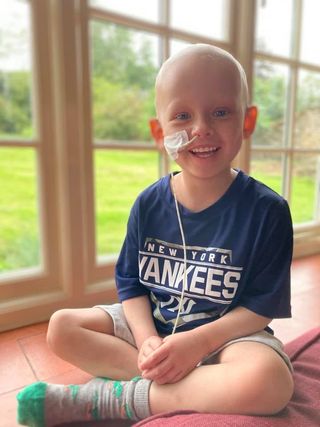
Oliver is currently undergoing chemotherapy. His family do not yet know what the next steps will be, but they are determined to keep every possible option open.
Oliver's Fundraising Campaign
Oliver’s family are now fundraising to give him the best possible chance, whatever comes next. Access to further treatments, including those abroad, can be life-changing - but also comes with significant costs.
How you can help
There are many ways you can help Oliver: by sharing his story on social media, by making a personal donation; holding a fundraising event; getting sponsored to take on a challenge.
If you would like help supporting Olivers campaign, please get in touch with the fundraising team on 0207 284 0800 and fundraising@solvingkidscancer.org.uk
Funds raised will go towards helping Oliver and his family. If Oliver no longer needs the funds or is in remission seven years post the end of successful treatment, the funds will be used to support other children and families affected by neuroblastoma through our activities. For children with relapsed high-risk neuroblastoma, like Oliver, the survival rate is much lower than other childhood cancers.